
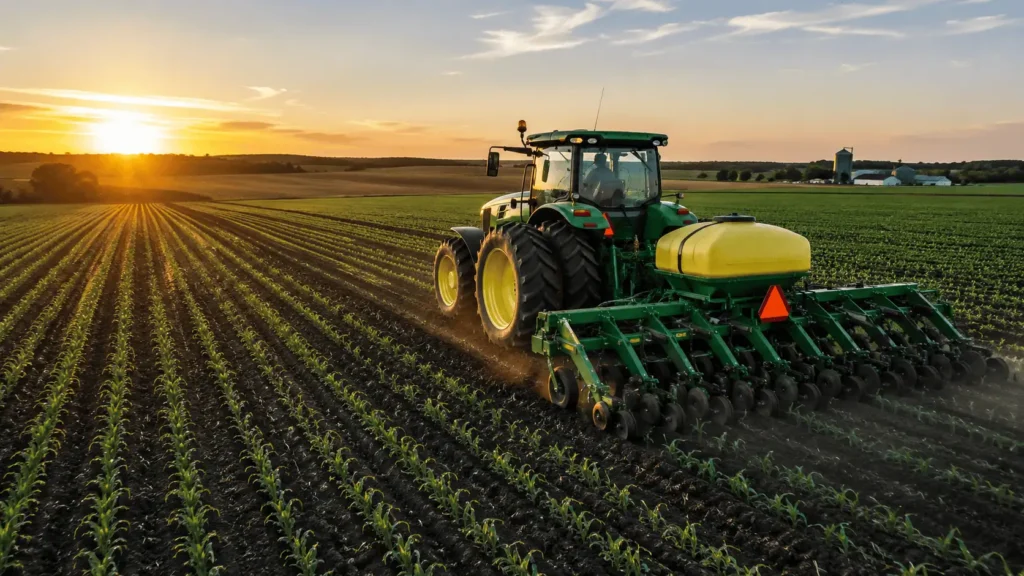
Knowing how to track farm equipment with GPS is becoming essential for modern farming operations that depend on efficiency, visibility, and cost control. Farm equipment represents one of the largest investments on any operation, and when tractors, sprayers, combines, balers, trailers, UTVs, and implements are spread across fields, barns, roads, and remote job sites, it can be difficult to know where everything is at any given moment. GPS tracking helps solve that problem by giving farmers real-time location data, equipment usage insights, maintenance visibility, and better control over day-to-day operations.
For many farms, equipment tracking is no longer just about finding a missing tractor. It is about improving productivity, reducing wasted time, protecting valuable assets, supporting staff accountability, and making smarter decisions. Whether you run a grain, vegetable, pasture, forage, livestock, or mixed farming operation, GPS tracking can help you manage equipment with greater precision.
Why GPS Tracking Matters for Farm Equipment
Farm equipment is expensive, mobile, and often used across large areas. A single piece of machinery may move between multiple fields, operators, sheds, service locations, and job sites in one day. Without a clear tracking system, managers may rely on phone calls, handwritten notes, memory, or guesswork to locate equipment. That creates delays and can lead to poor utilization.
GPS tracking gives farmers and managers a more reliable way to monitor assets. With GPS data, you can see where equipment is located, where it has been, how long it has been running, and whether it is being used efficiently. This visibility is especially valuable during busy seasons when every hour matters.
Common reasons farms use GPS tracking include:
- Locating equipment quickly
- Reducing downtime between tasks
- Monitoring equipment movement across fields
- Improving operator accountability
- Preventing unauthorized use
- Reducing theft risk
- Tracking service hours and maintenance needs
- Improving fieldwork coordination
- Supporting more accurate farm records
The more equipment an operation owns, the more important tracking becomes. Even small delays can affect planting, spraying, harvesting, feeding, hauling, and other time-sensitive work.
How GPS Farm Equipment Tracking Works
GPS tracking uses satellite signals to determine the location of a device installed on or carried with a piece of equipment. That location data is sent to a software platform, usually through cellular, satellite, or wireless connectivity. From there, farm managers can view equipment location and activity through a dashboard, mobile app, or farm management software system.
A typical GPS tracking setup includes:
- A GPS tracking device installed on the equipment
- A power source, such as the machine battery or an internal battery
- A connectivity method to transmit data
- Software that displays location and usage information
- Alerts, reports, or maintenance tools that help turn tracking data into action
Some systems provide basic location tracking, while more advanced platforms integrate equipment data with farm tasks, staff schedules, crop records, livestock workflows, maintenance logs, and financial planning. For most farms, the greatest value comes when GPS tracking is connected to the broader management system instead of operating as a separate tool.
Choose the Right Equipment to Track
The first step is deciding which equipment should be tracked. Not every asset requires the same level of monitoring. High-value, high-use, and mobile equipment should usually be the priority.
Equipment commonly tracked with GPS includes:
- Tractors
- Combines
- Sprayers
- Planters
- Balers
- Swathers
- Forage harvesters
- Grain carts
- Trucks
- Trailers
- Skid steers
- UTVs and ATVs
- Irrigation equipment
- Portable generators
- Fuel tanks
- Implements and attachments
Start with the equipment that creates the most operational risk if it is misplaced, stolen, underused, or out of service. For example, a combine during harvest or a sprayer during a narrow application window may be more urgent to track than a rarely used attachment.
Select the Right GPS Tracking Device
There are different types of GPS trackers for farm equipment. The right device depends on the type of machinery, how often it moves, where it operates, and what data you need.
Common options include:
- Hardwired GPS trackers: These connect directly to the equipment’s electrical system. They are a good choice for tractors, trucks, combines, sprayers, and other powered machinery.
- Battery-powered GPS trackers: These are useful for trailers, implements, portable tanks, and equipment without a reliable power source.
- Solar-powered GPS trackers: These can work well for equipment that sits outside and needs longer-term tracking without frequent battery replacement.
- Plug-in trackers: These may connect through diagnostic ports on certain vehicles and machines, depending on compatibility.
- Integrated telematics systems: Some newer machines include built-in GPS and telematics from the manufacturer.
When comparing devices, look at battery life, durability, weather resistance, update frequency, installation requirements, connectivity, and software compatibility. Farm equipment operates in dust, moisture, vibration, heat, cold, and rough terrain, so the tracker must be built for demanding conditions.
Install Trackers Securely
Once you choose the devices, proper installation is important. A tracker should be placed where it has a clear enough signal to communicate, but it should also be protected from damage, tampering, and harsh conditions.
For powered equipment, hardwired trackers are often installed near the battery, fuse panel, or another protected electrical connection. For trailers or implements, battery-powered trackers may be mounted in a discreet, weather-resistant location. In all cases, the installation should be secure enough to withstand vibration and field conditions.
Installation best practices include:
- Mount devices away from excessive heat and moving parts
- Protect wiring from abrasion and moisture
- Use durable mounting hardware
- Avoid locations that block GPS or cellular signals
- Label devices clearly in your tracking software
- Test each tracker before relying on it in the field
A clean setup prevents future problems and ensures location data is reliable when you need it.
Use Farm Management Software to Centralize Tracking
GPS tracking becomes much more useful when it is connected to a complete farm management software platform. A standalone map can show you where a tractor is, but integrated software can help you understand how that tractor supports the entire operation.
With the right farm management software, GPS tracking can work alongside:
- Equipment records
- Maintenance schedules
- Work orders
- Staff assignments
- Crop planning
- Livestock management
- Field activity logs
- Financial records
- Inventory tracking
- Reporting and performance analysis
This matters because equipment does not operate in isolation. A tractor may be tied to a planting job, a staff member, a field, a maintenance interval, fuel usage, and a crop plan. When all of that information is connected, managers can make better decisions faster.
Set Up Geofences for Fields, Yards, and Storage Areas
Geofencing is one of the most valuable features of GPS tracking. A geofence is a virtual boundary around a specific location, such as a field, barn, equipment yard, shop, pasture, storage site, or fuel area. When equipment enters or leaves that boundary, the system can record the movement or send an alert.
Geofences can help farmers:
- Confirm when the equipment arrives at a field
- Track how long machines stay in a work area
- Detect unauthorized movement
- Monitor equipment leaving the farm after hours
- Improve job costing by location
- Support better staff coordination
- Create more accurate records of field activity
For example, if a sprayer enters a specific field, the system may help document when application work began. If a trailer leaves a storage yard unexpectedly, the system can alert management. These details can make daily operations more transparent and easier to manage.
Monitor Equipment Usage and Idle Time
GPS tracking is not only about location. Many systems can also help track engine hours, movement history, and idle time. This information helps identify how equipment is being used and where improvements can be made.
Idle time can be costly. A machine that runs unnecessarily burns fuel, adds wear, and increases maintenance needs. Tracking usage patterns can help managers spot inefficiencies and coach operators when needed.
Usage data can help answer questions such as:
- Which machines are being used most often?
- Which equipment is sitting unused?
- Are operators spending too much time idling?
- Are machines being routed efficiently?
- Is equipment being used outside approved areas?
- Are service intervals being reached sooner than expected?
Better usage visibility can also help with future purchasing decisions. If one tractor is overused and another is underused, you may be able to rebalance work instead of buying more equipment.
Improve Maintenance Planning
Maintenance is one of the most practical reasons to track farm equipment with GPS and usage data. Preventive maintenance helps reduce breakdowns, extend equipment life, and protect productivity during critical seasons.
When tracking systems record hours, mileage, or movement, managers can schedule maintenance based on actual use instead of estimates. This is especially helpful for equipment that is shared across multiple operators or locations.
GPS-supported maintenance planning can help with:
- Oil changes
- Filter replacements
- Tire inspections
- Hydraulic checks
- Belt and chain inspections
- Calibration
- Seasonal service
- Repair history
- Service reminders
- Downtime tracking
A missed maintenance interval can lead to costly failures. During planting or harvest, one breakdown can delay an entire operation. GPS tracking, combined with equipment records, helps reduce that risk.
Protect Equipment from Theft and Unauthorized Use
Farm equipment theft is a serious concern, especially for portable assets, trailers, UTVs, fuel tanks, and machinery stored in remote areas. GPS tracking helps protect those assets by making it easier to detect and respond to suspicious movement.
A GPS tracker may allow you to:
- Receive alerts when equipment moves after hours
- Track the location of stolen equipment
- Confirm whether machinery is being used without permission
- Monitor remote storage sites
- Create a movement history for investigation
- Reduce the chance of long-term loss
While GPS tracking does not replace locks, gates, cameras, lighting, or insurance, it adds another layer of protection. For high-value equipment, that extra visibility can make a major difference.
Train Staff on the Tracking System
A GPS tracking system works best when staff understand how and why it is being used. Training should be direct, practical, and focused on operational benefits. The goal is not to create unnecessary oversight. The goal is to improve coordination, reduce confusion, protect equipment, and keep work moving.
Training should cover:
- How equipment locations are tracked
- How operators should check equipment in or out
- How work assignments connect to equipment use
- What alerts mean
- How maintenance issues should be reported
- What to do if equipment is missing or not showing correctly
- How tracking supports safety and accountability
Clear communication helps avoid misunderstandings and encourages better adoption. When staff see that tracking reduces phone calls, delays, and confusion, they are more likely to use the system properly.
Use Tracking Data to Make Better Business Decisions
Over time, GPS tracking creates a valuable record of how equipment supports the operation. That data can help farm owners and managers make better decisions about labor, equipment purchases, maintenance budgets, field logistics, and profitability.
For example, tracking data may show that certain fields require more travel time than expected. It may reveal that a specific piece of machinery is used heavily during only one short season. It may show repeated delays caused by poor equipment staging. These insights can help managers refine schedules, routes, staffing, and investments.
GPS tracking data can support decisions such as:
- Whether to buy, lease, or rent equipment
- When to replace aging machinery
- How to assign operators more efficiently
- Where to store equipment between jobs
- How to reduce unnecessary trips
- How to improve seasonal planning
- How to estimate equipment costs by field or enterprise
The result is a smarter operation with better visibility and stronger control over costs.
Common Mistakes to Avoid
GPS equipment tracking can provide strong results, but only when implemented correctly. Avoid these common mistakes:
- Tracking only a few machines without a clear plan
- Choosing devices that are not rugged enough for farm conditions
- Failing to test trackers after installation
- Ignoring battery life on non-powered assets
- Not setting up geofences or alerts
- Keeping tracking data separate from farm management records
- Failing to train staff
- Not reviewing reports regularly
- Treating GPS tracking as a one-time setup instead of an ongoing management tool
The value of GPS tracking comes from consistent use. The system should become part of daily operations, not just a tool used when something is missing.
FAQ
What is the best way to track farm equipment with GPS?
The best approach is to install durable GPS trackers on key equipment and connect them to farm management software. This allows you to monitor location, usage, maintenance, and work activity from one system.
Can GPS tracking help prevent farm equipment theft?
Yes. GPS tracking can alert you when equipment moves unexpectedly and can help locate stolen assets. It works best when combined with physical security measures such as locks, gates, cameras, and secure storage.
Do all tractors and machines need GPS trackers?
Not always. Start with high-value, high-use, and mobile equipment. Tractors, combines, sprayers, trucks, trailers, and UTVs are common priorities.
Can GPS tracking monitor equipment maintenance?
Yes. Many GPS tracking systems can help track engine hours, mileage, usage history, and service intervals. This makes it easier to schedule preventive maintenance based on actual equipment use.
Is GPS tracking useful for small farms?
Yes. Small farms can benefit from GPS tracking by reducing lost time, improving equipment organization, protecting assets, and keeping better records. The system should match the size and complexity of the operation.
What is geofencing in farm equipment tracking?
Geofencing creates a virtual boundary around a field, yard, pasture, shop, or storage area. The system can record or alert you when equipment enters or leaves that location.
Can GPS tracking improve staff accountability?
Yes. GPS tracking helps managers see where equipment is being used, how long it is active, and whether it is being used as assigned. This supports clearer communication and better coordination.
Does GPS tracking work in remote farm areas?
It depends on the device and connectivity method. Some trackers use cellular networks, while others may use satellite communication. Choose a solution that fits your farm’s coverage needs.
Simplify Farm Equipment Tracking with PIPE AG
Tracking farm equipment with GPS is one of the most practical ways to improve visibility, protect assets, reduce downtime, and run a more efficient farming operation. But tracking equipment is only one part of managing a profitable smart farm. To get the most value, your equipment data should connect with the rest of your operation.
Simplify your farming operation with PIPE AG, the most comprehensive Farm Management Software on the market. Manage livestock, crops, staff, finances, and equipment, all in one easy-to-use farm management software. We offer dedicated editions for Grain/Vegetable and Pasture/Forage farming operations, with Dairy just around the corner. The software is loaded with dozens of farm management software features, giving you everything you need to run a profitable smart farm with precision farming.
Contact us today for a demo and see how the right farm management software can help you manage equipment, streamline operations, and make better decisions across your entire farm.